
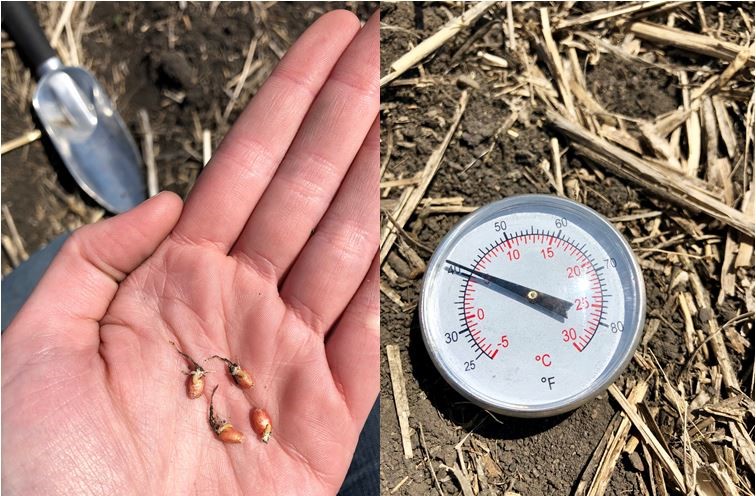
Seriously Mother Nature, it’s May. I thought we were past the below zero temperatures, wind chills, frosts, and snow. But, I guess not. We have crops to get into the ground, but what’s considered too early? Are we shooting ourselves in the foot by seeding in too cold of soils? And how can the efficacy of glyphosate be affected by our cool day time highs? Let’s get right into it.
It all starts with a seed. And we need to try and give that seed the best start we possibly can. But, even though the time crunch is on and acres need to be sown we still need to take some considerations into mind. Aiming to plant at a given crops optimal germination temperature is a big one. Manitoba weather has been far from the expected normal, and farmers have had to seed into chillier soils. In doing so, the potential of infection from soil pathogens (cause seedling diseases), poor germination, staggered germination, and seedling mortality has increased. Seed treatments are an aid to help lower these risks if one must plant into cold soil temperatures; they help protect the seed/seedling to give it the best possible start at germination to increase survival. Reduced and uneven plant stands just add to a later, in season list of problems. From staging issues at herbicide and fungicide timing to creating a more favourable setting for weed and insect pressure, the crop may experience stressors and a potential for yield loss throughout the season. Pictured above is wheat seed that was treated with Raxil Pro and planted 11 days prior to this photo. We’ve had the works since then … frost, a little bit of snow, below 0˚C soil and overnight temperatures. Many had to sow in cool temperatures so I recommended the agronomic practices that would best help ensure an improved germination potential and reduce some of the risks mentioned above. Starting with seed treatment, it was suggested that the wheat be planted slightly shallower than normal (as long as adequate moisture was still present) to try to have a warmer seed bed during day time highs, and that the seeding rate be bumped up to compensate for poor emergence or seedling death. When it comes to canola, the soil temperature is something I consider to be more critical. A given seed treatment option can last from 21-35 days, and from the moment that seed is first sown the countdown is on. So, if you are planting in less than ideal soil temperatures that seed will be very slowly germinating, and when the canola seedling finally emerges the treatment left on the seed will be minimal. Leaving canola with little defense against pests such a flea beetles, cutworms, etc. High populations of flea beetles (mostly crucifer) were present last August, feeding on volunteers and smaller staged brassica species. This is typically a good indicator that they will be present the following spring, so we must consider the potential of this risk when seeding canola this spring.
Optimal Seeding Temperatures for Manitoba:
- Cereals (wheat, barley, oats) → 4˚C
- Peas → 4-5˚C
- Canola → 5-7˚C (ideally, I would prefer 7+˚C)
- Soybeans → 10˚C
The harvest 2018 season was a hectic one, with the first 6+ inches of snow at the end of September a lot of farmers struggled to get crops off before the snow came to stay for good. Many did very little to no post-harvest spraying; the only weed control that got done for the most part was pre-harvest desiccation. Going into the 2019 seeding season I expected to see dirty fields, but with these cool temperatures there is very little new growth of annuals and the perennials are just starting to green. Glyphosate is a group 9 systemic herbicide, which means the product must hit the plant leaves in order for the chemical to make its way to the growing point to kill the weed. The optimal temperature range for spraying glyphosate is 16-24˚C, at this temp the plants (weeds) are actively growing and are not under any temperature related stresses, so they can efficiently take up the product. But in turn, temperatures lower than 15˚C the plant growth begins to slow down and in correlation the herbicide uptake will slow down. In ideal spraying temperatures, the glyphosate will translocate to the plants growing point typically within 24 hours, under temperature stress this process may take up to 5 days. The guideline for minimum temp for spraying is 10˚C, and only consider spraying if this temperature is/will be maintained for 2-4 hours after application. One must also take into mind if the evening after spraying will experience a frost, a heavier frost of -5˚C or colder may reduce control. The plant may have become damaged before the glyphosate had a chance to properly translocate, therefore reducing the overall efficacy.
There are so many factors that come into play with farming, so if you ever have any questions do not hesitate to reach out!

 Agronomy Nerd with a Cattle Herd